When Every Moment Matters, Intelligence Must Move With Care.
An unexpected incident can turn an ordinary day into a time-critical medical situation. The first minutes demand clear observations, sound judgment and effective coordination—often before a patient reaches a hospital.
Explore the approach ↓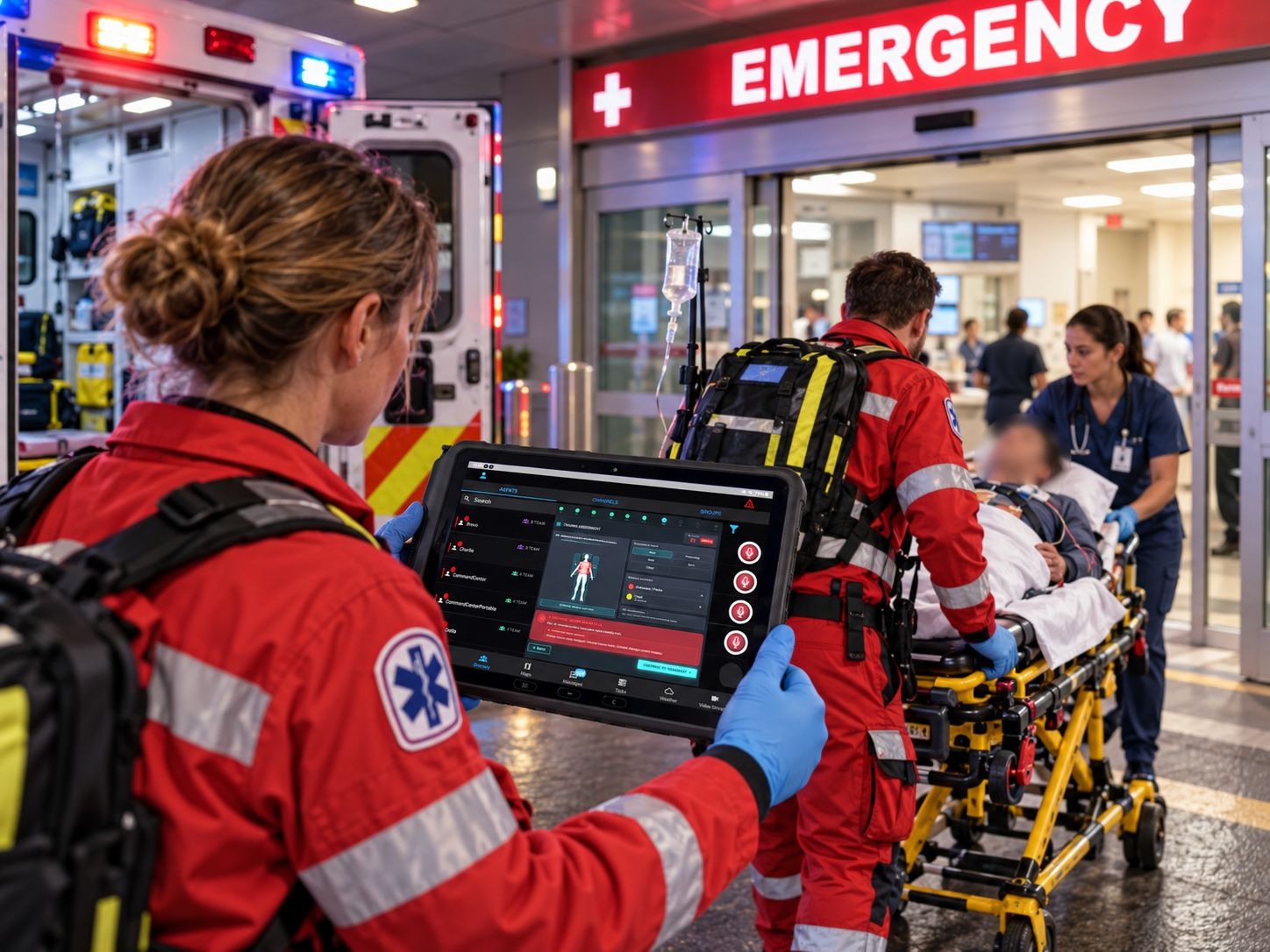
Why this matters
First responders and care teams may be working with incomplete information, changing vital signs and difficult conditions. An isolated measurement cannot tell the whole story. What matters is recognizing how the clinical picture is evolving, sharing relevant information and knowing when immediate escalation is essential.
Not a static score. An evolving clinical picture.
MedAIQ is developing trauma-focused clinical intelligence intended to bring together observations, relevant patient information and available monitoring inputs. The aim is to support structured assessment and help qualified professionals recognize concerning changes, prioritize actions and communicate the evolving situation across the response pathway.
Intelligence that supports each stage
At the incident
Support structured collection of observations and relevant vital signs, where available, without delaying urgent first aid.
During assessment
Help responders consider changing risk patterns and information that may warrant urgent professional attention.
During coordination
Support clear handover of clinically relevant information between responders, dispatch and receiving teams, where systems are integrated.
At hospital handover
Help receiving clinicians understand the sequence of observations and interventions, subject to available integrations and protocols.
Designed around real clinical needs
For first responders
Better-organized information in demanding environments, while preserving established emergency protocols.
For clinicians
A clearer account of the evolving situation to support triage and professional decisions.
For services
The potential for more coordinated information flow from incident response to hospital handover.